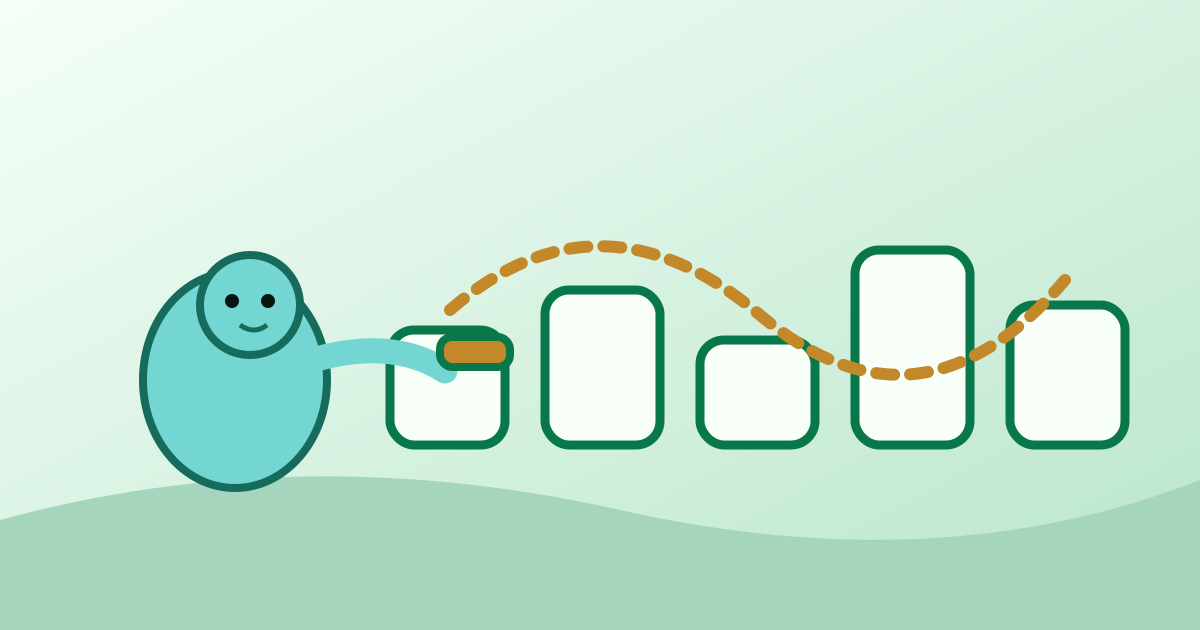
LeetCode 55 Jump Game: ไปถึงปลายทางด้วย greedy แบบไม่แบกตาราง
โจทย์ Jump Game ให้ array จำนวนก้าวสูงสุดจากแต่ละตำแหน่ง แล้วถามว่าเริ่มช่องแรกจะไปถึงช่องสุดท้ายได้หรือไม่ครับ เราเลือกกระโดดสั้นกว่าค่าสูงสุดได้ จึงไม่ต้องจำทุกเส้นทาง
สรุปโจทย์ด้วยคำของเรา
แต่ละช่องเป็นปั๊มน้ำมันที่บอกระยะทางสูงสุด ไม่ได้บังคับให้ขับจนสุด เป้าหมายคือรู้ว่าแนวหน้าที่ไปถึงได้ขยายครอบปลายทางหรือเจอช่องที่อยู่เลยแนวหน้า
วิธีที่ 1: forward maximum reach
เดินซ้ายไปขวาและเก็บ index ไกลสุด farthest หาก index ปัจจุบันมากกว่า farthest แปลว่าเราเดินมาถึงช่องที่เข้าถึงไม่ได้
- เวลา
O(n)หน่วยความจำO(1) - อ่านง่ายและหยุดเร็วเมื่อเจอ gap
- ไม่แก้ input และเหมาะเป็น default
วิธีที่ 2: backward goal
เริ่ม goal ที่ช่องสุดท้าย เดินย้อนกลับ หากตำแหน่งใดกระโดดถึง goal ได้ ให้ย้าย goal มาที่ตำแหน่งนั้น สุดท้าย goal ต้องกลับมาศูนย์
- เวลา
O(n)หน่วยความจำO(1) - proof สั้นและไม่มี arithmetic ของ frontier หลายค่า
- ต้องมี random access จึงไม่เหมาะกับ streaming input
วิธีที่ 3: dynamic programming
เก็บ boolean ว่าแต่ละช่องเข้าถึงได้ แล้วกระจายไปข้างหน้า วิธีนี้ตรงกับนิยามแต่ทำงานสูงสุด O(n²) และใช้ O(n) memory เหมาะเป็น oracle สำหรับ test หรือเมื่อโจทย์ต่อยอดให้ต้องนับ/คืนเส้นทาง
import unittest


def can_jump_forward(nums):
    farthest = 0
    for index, jump in enumerate(nums):
        if index > farthest:
            return False
        farthest = max(farthest, index + jump)
        if farthest >= len(nums) - 1:
            return True
    return bool(nums)


def can_jump_backward(nums):
    if not nums:
        return False
    goal = len(nums) - 1
    for index in range(goal - 1, -1, -1):
        if index + nums[index] >= goal:
            goal = index
    return goal == 0


def can_jump_dp(nums):
    if not nums:
        return False
    reachable = [False] * len(nums)
    reachable[0] = True
    for index, ok in enumerate(reachable):
        if not ok:
            continue
        for nxt in range(index + 1, min(len(nums), index + nums[index] + 1)):
            reachable[nxt] = True
    return reachable[-1]


class JumpGameTests(unittest.TestCase):
    def check(self, nums, expected):
        self.assertEqual(can_jump_forward(nums), expected)
        self.assertEqual(can_jump_backward(nums), expected)
        self.assertEqual(can_jump_dp(nums), expected)

    def test_reachable_and_blocked(self):
        self.check([2, 3, 1, 1, 4], True)
        self.check([3, 2, 1, 0, 4], False)

    def test_boundaries(self):
        self.check([0], True)
        self.check([], False)
        self.check([2, 0, 0], True)


if __name__ == "__main__":
    unittest.main()
Decision table
| สถานการณ์ | Forward reach | Backward goal | DP |
|---|---|---|---|
| input ใหญ่ | ดีที่สุด | ดีที่สุด | หลีกเลี่ยง |
| memory จำกัด | O(1) | O(1) | O(n) |
| streaming ซ้ายไปขวา | เหมาะที่สุด | ไม่เหมาะ | ไม่เหมาะ |
| readability | เห็น frontier ชัด | proof สั้น | ตรงนิยาม |
| ต้องคืนเส้นทางภายหลัง | ต้องเพิ่ม parent | ต้องเพิ่มข้อมูล | ต่อได้ง่ายกว่า |
| ห้ามแก้ input | ผ่าน | ผ่าน | ผ่าน |
Best default: forward maximum reach เพราะ O(n), O(1), หยุดเร็ว และรองรับข้อมูลที่ไหลจากซ้ายไปขวา
Edge cases
- array ช่องเดียวถึงเป้าหมายแล้วแม้ค่าเป็นศูนย์
- array ว่างไม่ได้อยู่ใน constraints ปกติ แต่ helper ควรกำหนด contract
- ศูนย์กลางทางไม่ใช่ปัญหาหาก frontier กระโดดข้ามได้
- ภาษา integer คงที่ต้องระวัง
index + jumpoverflow หาก constraints ใหญ่กว่าปกติ
Recap
- เก็บ “ไกลสุดที่ถึงได้” ไม่ต้องลองทุกเส้นทาง
- ถ้า index เกิน frontier ให้ตอบ false ทันที
- backward goal เป็นทางเลือกที่ proof กระชับ
- DP ใช้เป็น oracle/โจทย์ต่อยอด ไม่ใช่ default